
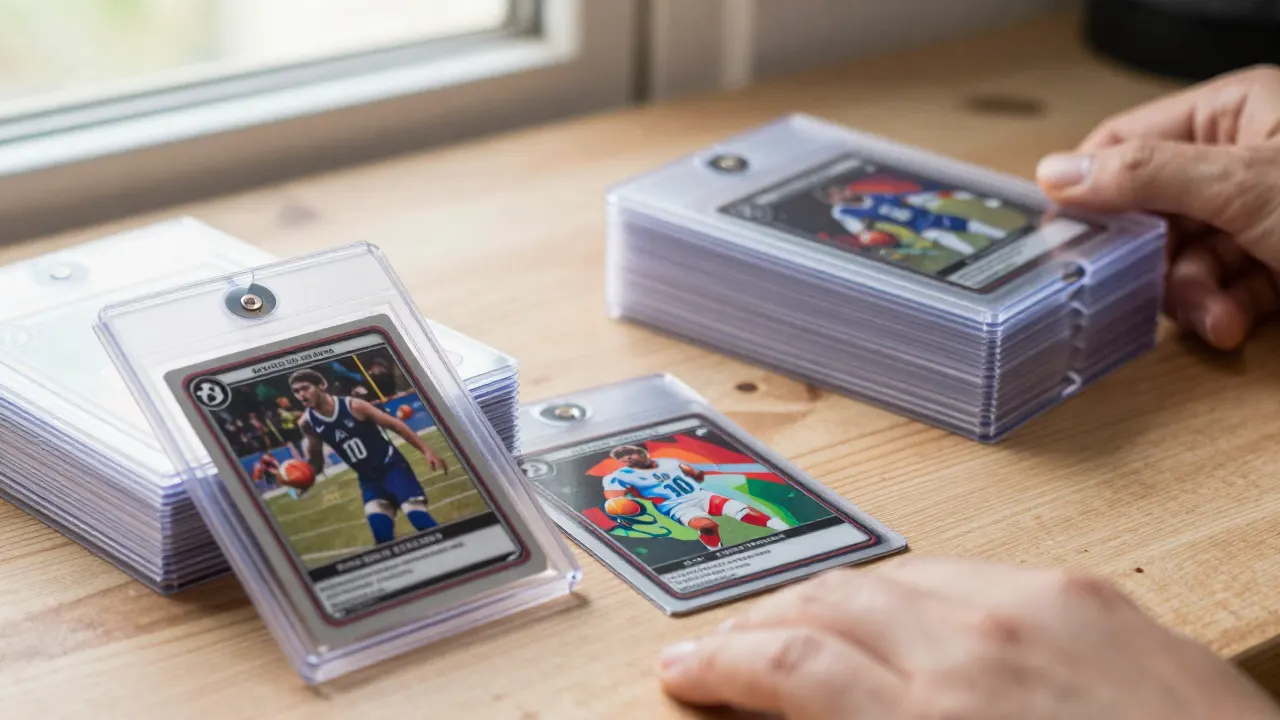
Most card damage comes down to two things: scratches on the surface and bends in the card stock. That is exactly where penny sleeves vs toploaders splits. One handles the surface, the other handles the shape, and knowing which job each one does keeps you from under-protecting a valuable card or overspending on bulk.
Table of ContentsShowHide
What a penny sleeve does
A penny sleeve is a thin, soft plastic sleeve that fits a standard-size card with a little room to spare. The name comes from how inexpensive they are per sleeve. Its job is simple: keep fingerprints, dust, and light scratches off the card’s surface and edges. If you are setting up a whole collection, our long-term card storage guide covers boxes and binders too.
What a penny sleeve does not do is stop a card from bending. The plastic is flexible, so a sleeved card in a pocket or a loose stack can still crease.
Use a penny sleeve when:
- You want basic surface protection for a card you plan to keep.
- You are about to put a card into a toploader or another holder (sleeving first reduces friction on the surface).
- You are sorting cards and want to separate the ones worth a closer look.
What a toploader does
A toploader is a rigid plastic holder that is open at the top. The card slides in from the open end, usually already inside a penny sleeve. Because the holder is stiff, it protects against bending, which is the damage that most often ruins a card’s condition.
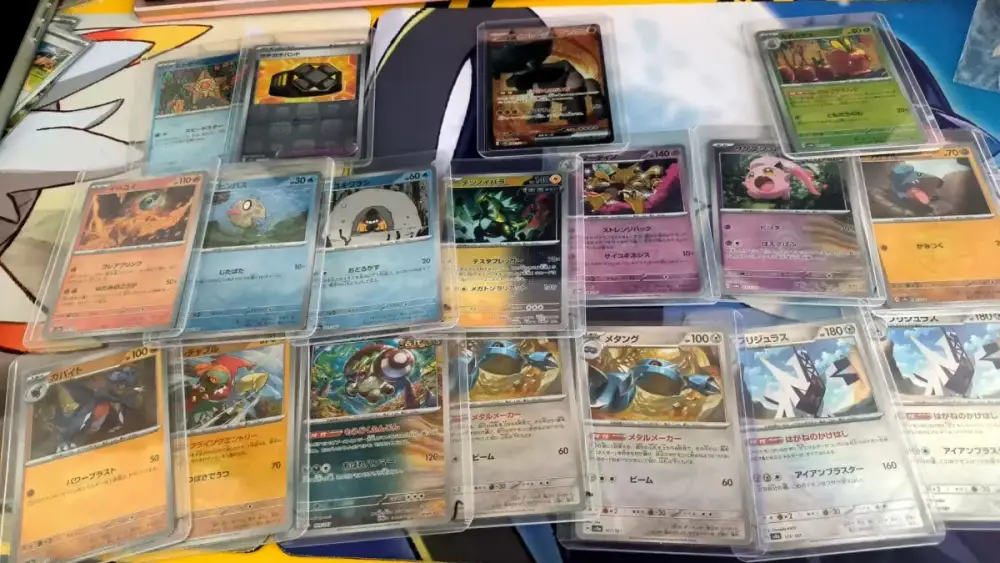
Toploaders come in different thicknesses, usually listed in points (pt). A standard toploader suits most regular cards. Thicker cards, such as many memorabilia or patch cards, need a holder rated for a higher thickness. Forcing a thick card into a thin toploader can damage its edges, so check the thickness on the package before you buy.
Use a toploader when:
- A card has meaningful value to you, either financial or personal.
- You are shipping or transporting a card.
- You want to store a card upright in a box without it flexing.
Penny sleeves vs toploaders: side-by-side comparison
| Feature | Penny sleeve | Toploader |
|---|---|---|
| Material | Soft, flexible plastic | Rigid plastic |
| Main protection | Surface scratches, fingerprints, dust | Bends and creases |
| Fits in a binder page | Yes | Usually no (too thick for most pages) |
| Good for shipping on its own | No | Yes, with a sleeve inside |
| Best use | Every card you want to keep clean | Cards you want to keep flat and safe |
When to use a penny sleeve and a toploader together
For any card you care about, the standard approach is a penny sleeve first, then a toploader. The sleeve keeps the surface from rubbing against the hard plastic, and the toploader keeps the card flat. Many collectors also place the toploader into a small resealable bag (often called a team bag) to keep dust out and stop the card from sliding out of the open top.
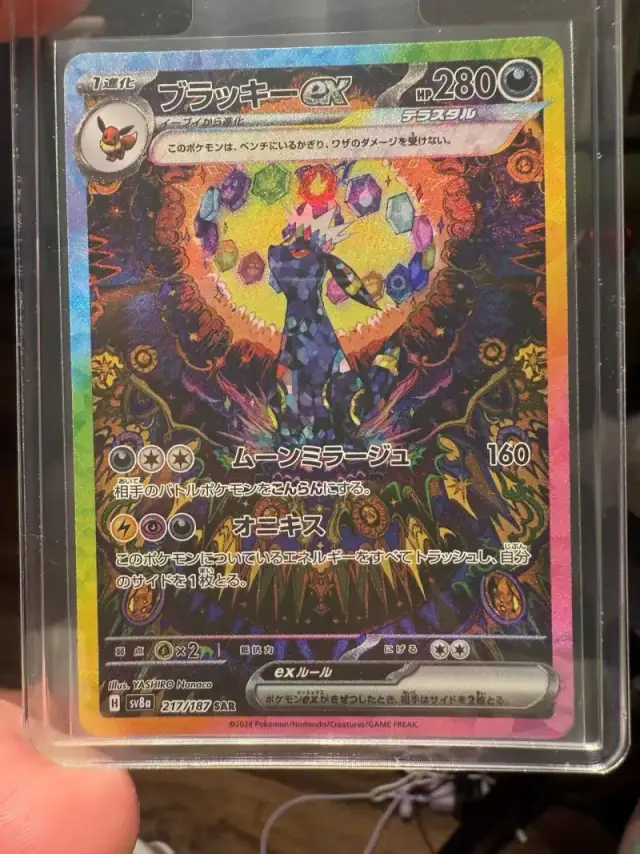
If you seal a toploader with tape for shipping, keep the tape on the outside of the holder and away from the card itself. Tape residue on a card is hard to remove.
Other options worth knowing
- Perfect fit or inner sleeves: very snug sleeves, often used under a second sleeve for cards that are played in a deck.
- Deck sleeves: thicker, often colored sleeves designed for shuffling in card games. They are made for play rather than long-term storage.
- Semi-rigid holders: stiffer than a sleeve but more flexible than a toploader. Some grading services ask for semi-rigid holders instead of toploaders, so read the submission guidelines before you send cards in.
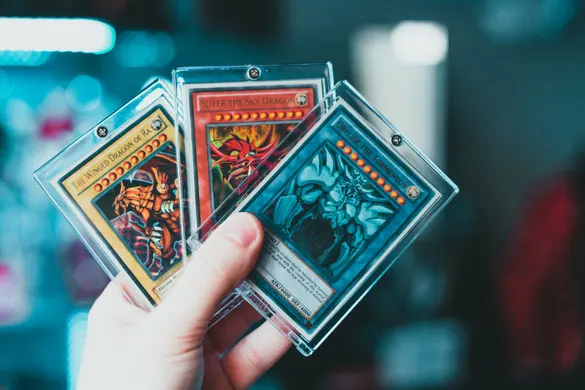
- Magnetic or screw-down cases: fully enclosed hard cases for display. They are bulkier and cost more per card.
Who can skip toploaders
If most of your collection is common cards you keep for fun, a toploader for every card adds cost and takes up space. Bulk commons are usually fine stored upright in a cardboard storage box, with or without penny sleeves. Save toploaders for the cards you would be upset to see bent.
What to look for when buying
- Material: look for sleeves labeled acid-free and PVC-free, since some plastics can affect cards over long periods.
- Size: confirm the product fits standard-size cards, or Japanese-size cards if that is what you collect. The two are not interchangeable.
- Thickness rating: for toploaders, match the rating to your thickest cards.
- Clarity: clear plastic makes it easier to check a card’s condition without removing it.
For most collectors, the simplest rule works: sleeve every card you want to keep clean, and add a toploader to anything you would be upset to see bent. The one exception is grading submissions, where the company’s own holder requirements come first.