
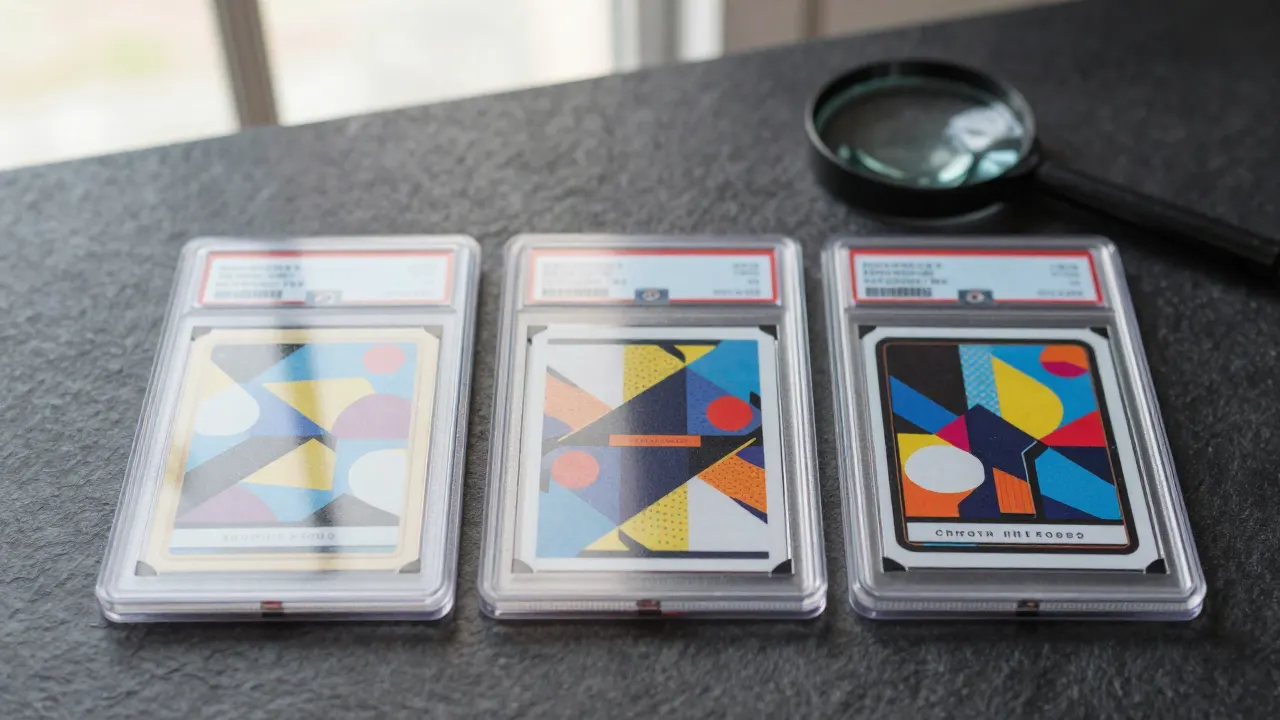
There is no single best grading company, and anyone who says otherwise is usually selling one of them. PSA vs BGS vs CGC comes down to how each one reports a grade, what its label tells a buyer, and how the market treats its slabs for your specific card. All three use a 10-point scale, so the differences are in the details below.
Table of ContentsShowHide
PSA vs BGS vs CGC at a glance
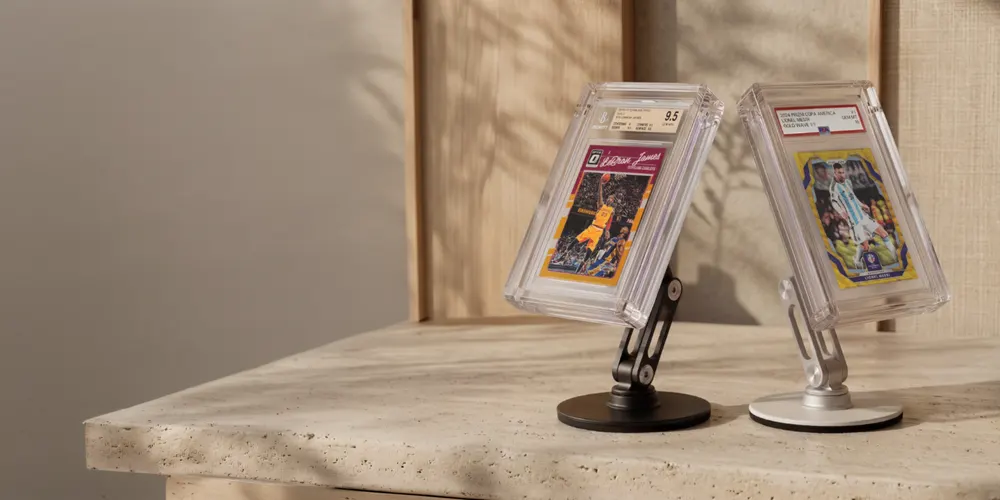
- PSA (Professional Sports Authenticator): grades sports cards and trading card games, including Pokémon. A PSA 10 is labeled Gem Mint.
- BGS (Beckett Grading Services): part of Beckett, a long-running name in sports card pricing guides. BGS is known for subgrades, described below.
- CGC (Certified Guaranty Company): well known in comic books, and now also active in trading cards. CGC labels include a Pristine 10 grade above Gem Mint 10.
How each one reports a grade
PSA
PSA gives one overall grade. The label is simple: card details, the grade, and a certification number you can look up on PSA’s website.
BGS
BGS can show four subgrades on the label: centering, corners, edges, and surface. The overall grade is based on those four scores. A card that earns a 10 in all four subgrades receives what collectors call a Black Label, which is rare. Subgrades are useful if you want to know exactly why a card received its grade.
CGC
CGC also uses a 10-point scale and separates Pristine 10 from Gem Mint 10, with Pristine as the higher of the two. Like the others, each slab has a certification number you can verify online.
PSA vs BGS vs CGC comparison table
| PSA | BGS | CGC | |
|---|---|---|---|
| Scale | 1 to 10 | 1 to 10 | 1 to 10 |
| Top grade name | Gem Mint 10 | Pristine 10 / Black Label | Pristine 10 |
| Subgrades on label | No | Yes (centering, corners, edges, surface) | Depends on the service level |
| Online cert lookup | Yes | Yes | Yes |
Pricing, service tiers, and turnaround times change often, so we do not list them here. Check each company’s current submission page before you decide.
Does the grading company affect resale value?
It can. The same card in the same numeric grade can sell for different prices depending on which company graded it, and the gap varies by card, by sport or game, and over time. The most reliable way to judge this is to look at recent sold listings for your specific card in each company’s slab, not asking prices.
How to choose
- Decide your goal. If you plan to sell, look at which slab sells best for your card in recent sales. If you are keeping the card, choose the label and holder you like most.
- Decide whether you want subgrades. If you want a detailed breakdown of a card’s condition, BGS subgrades give you that.
- Compare total cost. Add the grading fee, shipping both ways, and insurance. Compare that total with what the card is likely worth after grading.
- Read the submission rules. Each company has its own requirements for holders, packing, and forms.
When grading is not worth it
- The card’s likely value after grading is lower than the total cost of grading it.
- The card has visible damage, such as creases, heavy whitening on the edges, or surface scratches. A low grade rarely adds value.
- You simply enjoy the card and do not plan to sell it. A penny sleeve and a toploader protect it well for far less money.
Before you submit
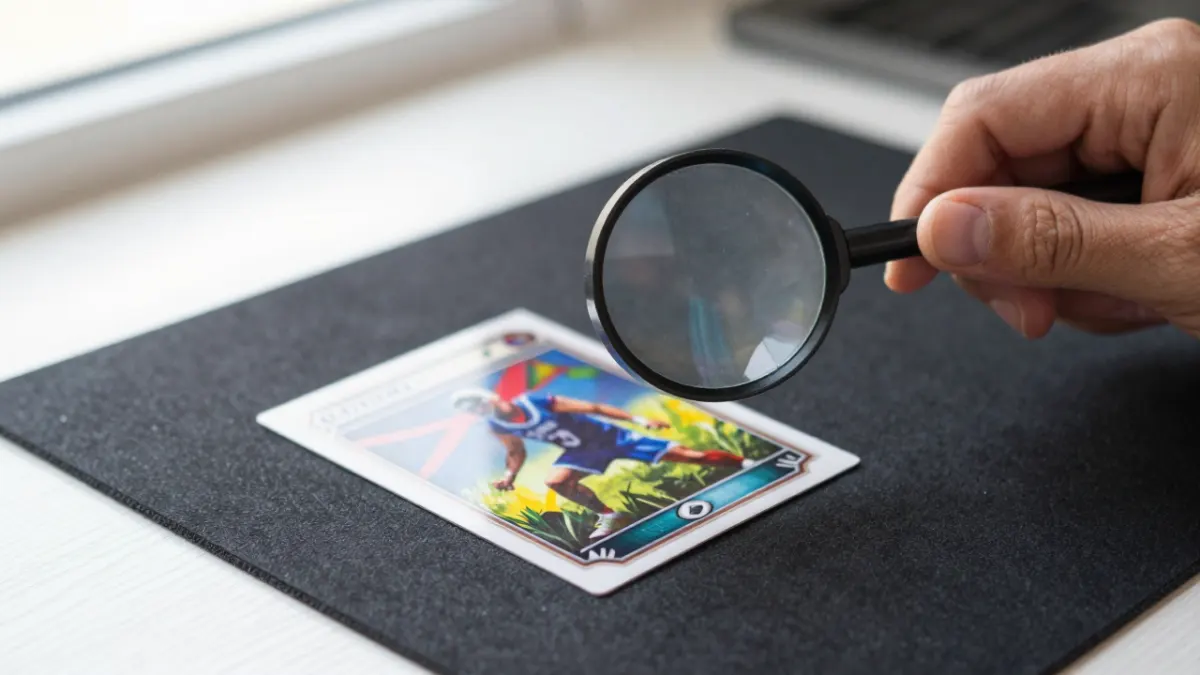
- Look at the card under good light for scratches, print lines, and dents.
- Check centering by comparing the borders on opposite sides.
- Handle the card by its edges with clean, dry hands.
- Pack it in the type of holder the company asks for. Our penny sleeves vs toploaders comparison explains how those holders differ.
Once you have picked a company, the next step is preparing the card itself. Clean handling and the right holder matter as much as the choice of grader, and our guide to storing trading cards long term covers how to keep a card in submission-ready shape until it ships.